
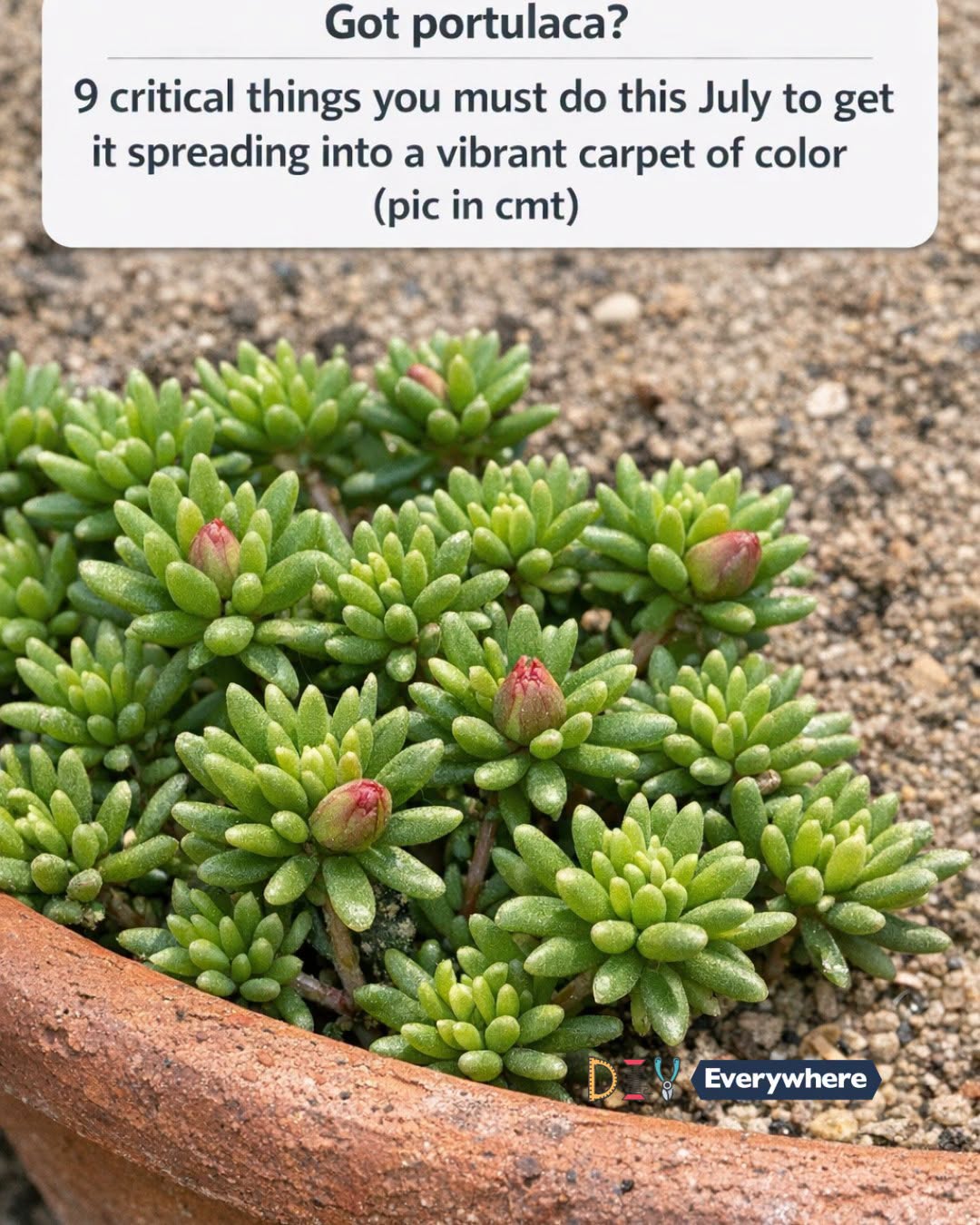
If your portulaca is looking a little sparse in early July, don’t panic. This is exactly the point in the summer when I start paying closer attention to mine, because one or two smart adjustments now can turn a few scattered plants into a low, blooming mat by August. Here in the Midwest, July heat can either make moss rose absolutely thrive or leave it leggy, patchy, and strangely stubborn, depending on how it’s planted and cared for.
I love portulaca because it gives me that high-color, low-fuss look I want around my patio and mailbox bed without demanding the kind of babysitting my tomatoes do. Over the years, I’ve learned that July is not the month to simply “let it do its thing.” It’s the month to help it branch, root, spread, and keep blooming hard through the hottest stretch of the season. If you want that vibrant carpet of color, these are the steps I’d focus on right now.
1. Make sure it is getting 6 to 8 hours of direct sun
Portulaca is one of those plants that really means it when it asks for full sun. I’ve had it perform beautifully in spots that get 8 or even 10 hours of direct light, and I’ve also watched it sulk in beds that only get morning sun until about noon. In July, if your plants are flowering lightly, stretching upward, or leaving gaps instead of creeping outward, insufficient sun is often the first thing to check.
If your bed gets less than 6 solid hours of direct sun, don’t expect a dense carpet. Portulaca opens its flowers best in bright light and high heat. In containers, this is easy to fix: move the pot to a south- or west-facing location. In the ground, you may not be able to relocate mature plants, but you can trim back nearby annuals or anything shading them after lunch. Even removing shade from just 2 to 3 afternoon hours can noticeably improve bloom count and lateral spread within 10 to 14 days.
2. Thin crowded plants so each one has room to branch
This sounds backward if your goal is a thick groundcover, but overcrowding can actually slow down the “carpet” effect. When seedlings or nursery starts are jammed too tightly, the stems compete for light and airflow. Instead of creeping and rooting along the soil, they often rise up, tangle together, and bloom mostly at the tips.
In July, I like to aim for roughly 6 to 8 inches between individual plants if they are still distinct clumps. That spacing gives each plant enough room to throw out stems in all directions. Within a few weeks, those stems usually meet and knit together anyway. If you have dense clusters, gently remove the weakest or most shaded stems, especially in the center, so light can reach the crown. It feels harsh the first time you do it, but I’ve had much faster fill-in after thinning than after leaving a crowded patch alone.
3. Pinch or trim legginess to force side shoots
July is a perfect time to shape portulaca. If stems are getting long and stringy, pinch back 1 to 2 inches from the tips using your fingers or clean scissors. I usually do this when a plant has several stems over 5 inches long but looks thin at the base. That quick trim encourages the plant to branch lower down, which is what creates a fuller mat instead of a few wandering vines.
You do not need to shear the whole planting to the ground. A light haircut works best. Remove no more than about one-third of the total growth at a time, and water lightly afterward if the soil is bone dry. In hot weather, I usually trim in the evening after 7 p.m. or early in the morning before the sun gets intense. Within 7 to 10 days, you should start seeing fresh side growth from the nodes just below where you cut.
4. Top-dress with gritty, fast-draining soil if the bed is compacted
One of the biggest mistakes I see with portulaca is planting it in rich, moisture-holding soil and assuming that will help it spread faster. In reality, this plant wants drainage first. If your bed crusts over, stays damp for more than a day after rain, or feels heavy like clay when you press it, your portulaca may hesitate to root along the stems.lire la suite sur la page suivante >>
