
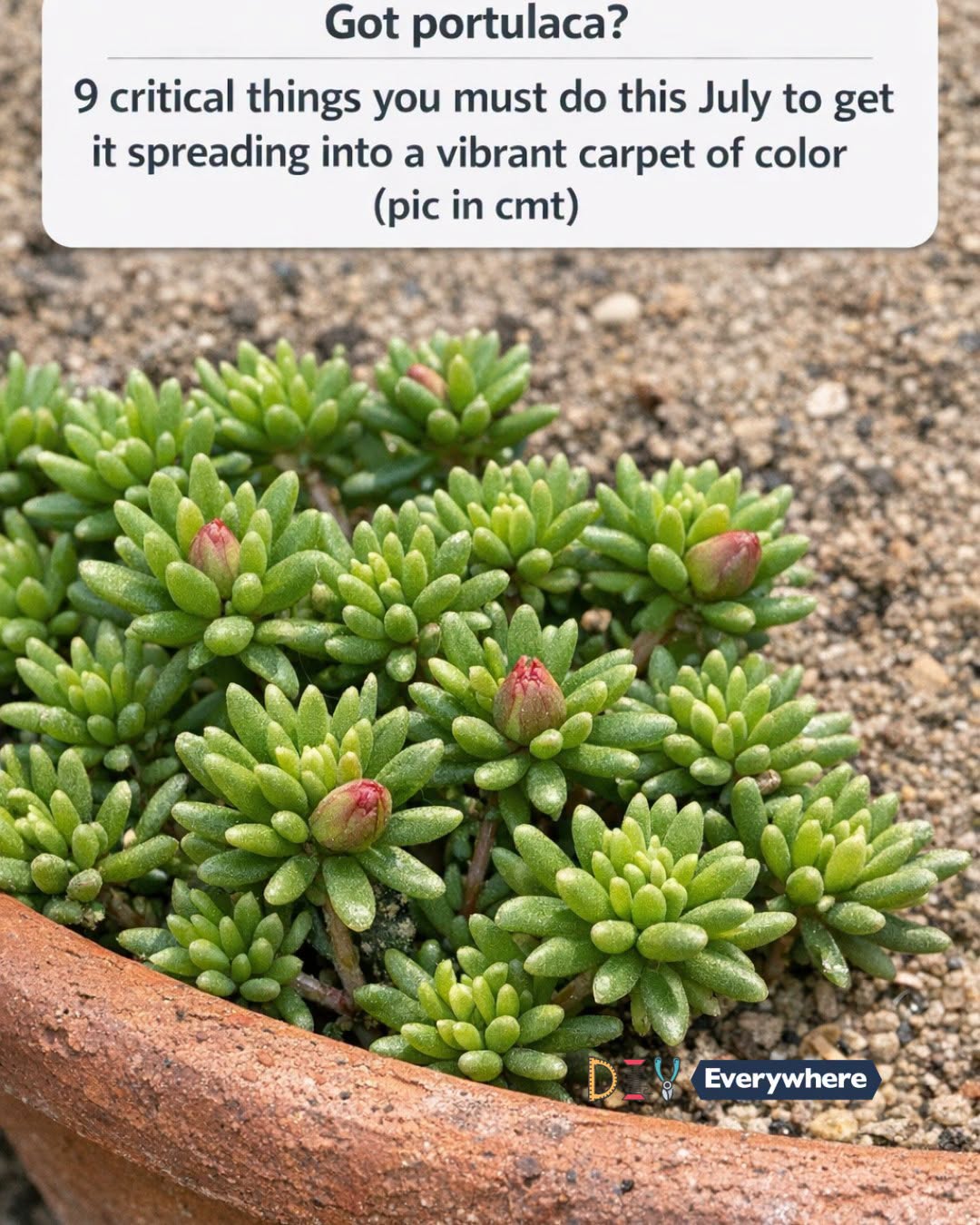
In July, I like to top-dress around the plants with a 1/2-inch to 1-inch layer of gritty material. A simple mix of 2 parts potting mix, 1 part coarse sand, and 1 part fine gravel works well. You can also use cactus mix as a shortcut. Tuck this around the stems, especially where you want them to root and spread. This small adjustment improves drainage at the surface and gives creeping stems a better place to settle. I’ve done this in a front border by the driveway where the soil baked hard, and it made a surprising difference in how quickly bare spots filled.
5. Water deeply, then let the soil dry down
Portulaca is drought tolerant, but “drought tolerant” is not the same thing as “never water it in July.” To spread well, especially in containers and hot reflected-heat spots, it needs a consistent pattern: soak thoroughly, then allow the top 1 to 2 inches of soil to dry before watering again. Constant light sprinkling encourages shallow roots and can leave the plant both weak and patchy.
In my Midwest yard, in-ground portulaca typically needs a deep watering about once every 5 to 7 days if we have normal summer heat in the mid-80s to low 90s. In containers, especially terra-cotta or shallow bowls, it may need water every 2 to 3 days during a heat wave above 90 degrees. When I water, I aim to moisten the root zone to about 4 to 6 inches deep. Then I leave it alone until the soil actually dries. Soggy soil is much more dangerous to portulaca than a day of dryness.
6. Fertilize lightly, or you will get stems instead of blooms
If you want a blanket of flowers, be careful with fertilizer in July. Too much nitrogen pushes leafy growth that looks green and healthy at first, but often blooms less and sprawls in a looser, messier way. Portulaca is not a heavy feeder, and I treat it more like succulents than petunias.
A half-strength bloom fertilizer every 3 to 4 weeks is plenty. Look for something with a lower first number, such as 5-10-10 or 4-8-6, and dilute it to 50 percent of the label rate. If you planted it in fresh potting mix and it’s already blooming well, you may not need to feed it at all this month. Personally, I’d rather underfeed than overfeed portulaca. One year I got overenthusiastic with an all-purpose liquid fertilizer, and I ended up with lots of stems, fewer flowers, and a much less tidy look around my patio pots.
7. Press healthy stems into bare spots to encourage rooting
This is one of my favorite tricks because it feels almost too easy. Portulaca stems can root where they touch suitable soil, especially when conditions are warm and dry enough to keep them from rotting. If you have empty patches between plants, gently guide a healthy stem into that space and pin it against the soil surface.
You can use small landscape pins, bent floral wire, or even a clean pebble to hold the stem in place. Cover the contact point with about 1/4 inch of gritty soil. Do not bury the whole stem. Keep that area just lightly moist for several days, not wet. In good July heat, I often see new rooting in 7 to 14 days. Once the stem takes hold, that bare spot starts filling much faster than if you wait for the plant to wander there naturally.
8. Deadhead selectively, but don’t obsess over every spent bloom
Portulaca is not like some annuals that completely stall if you skip deadheading for a week. It is fairly self-sufficient. Still, if you want the planting to look cleaner and keep directing energy into fresh buds, selective cleanup helps in July, especially on older or container-grown plants.
I focus on removing dried seed capsules and any stem tips that have finished a heavy flush and are looking tired. Usually I spend 5 minutes with a small snip basket while I’m outside checking my herbs. I do not try to remove every single faded bloom, because portulaca flowers are small and short-lived anyway. The goal is simply to prevent the plant from getting scraggly and to encourage fresh branching where older bloom clusters have passed.
9. Pull weeds early before they shade the crowns
This is not the glamorous tip, but it matters. Portulaca stays low to the ground, so it loses the battle quickly if crabgrass, spurge, or upright summer weeds start muscling into the patch. Even a few weeds can cast enough shade over the crowns to reduce blooming and interrupt lateral spread.
In July, I try to weed by hand once a week, especially after rain when roots slide out more easily. Get weeds when they are under 3 inches tall if possible. Be gentle around portulaca stems, because they can snap where they’ve begun to root. In one sunny strip along my sidewalk, I ignored weeds for about 10 days during a busy work stretch, and that was enough for the planting to look noticeably thinner. Once I cleared the invaders and gave it a trim, it bounced back, but I definitely learned my lesson.
10. Protect it from mulch that is too thick or too damp
A lot of gardeners automatically mulch every flower bed, but portulaca is one of the few plants I handle differently. Thick hardwood mulch, damp shredded bark, or mulch piled around the crowns can slow spreading and trap moisture where the stems need air. If mulch pieces are larger than the stems, they can also physically block rooting and make the planting look choppy instead of seamless.
If you want a neater finish, use a very light layer of fine gravel, pea gravel, or decomposed granite no deeper than 1/2 inch. Keep the crown of each plant clear by about 1 inch. In containers, I sometimes skip mulch entirely. The plant itself becomes the living mulch once it starts filling in. If your current mulch is chunky and holding moisture, pull it back now so the stems can contact the soil surface.
11. Watch for rot and fix drainage before the patch collapses
July storms can create problems fast, especially in low spots or decorative containers with poor drainage. If part of your portulaca suddenly turns mushy, translucent, or brown at the base, you are likely dealing with stem or crown rot. The fix is not more water or fertilizer. The fix is removing damaged growth and drying the situation out.
Cut out affected sections promptly, going back to healthy tissue. If the problem is in a pot, make sure water drains freely from the bottom and never sits in a saucer for more than 30 minutes. If the problem is in a bed, loosen the top layer of soil gently and top-dress with sand or gravel to dry the surface faster. Healthy sections can often be rerouted and rooted elsewhere. I’ve saved more than one planting this way after a week of heavy rain followed by steamy heat.
12. Take quick cuttings now if you want a fuller carpet by late summer
If your goal is a denser display before August ends, July is a great time to make more plants from what you already have. Snip 3- to 5-inch healthy stem cuttings, strip the leaves from the bottom inch, and let the cut ends dry for a few hours in a shady spot. Then insert them into a tray or small pot filled with cactus mix or a blend of potting mix and coarse sand.
Keep the cuttings in bright light, not harsh all-day sun, for the first several days. Water just enough to keep the mix barely moist. They usually root in about 7 to 10 days in warm weather. Once they have started rooting, you can tuck them into bare spaces in the garden or containers. This is one of the easiest ways to speed up that “carpet” effect without buying another flat of annuals. As someone who is always trying to stretch the garden budget after picking up one too many grocery-store impulse plants, I love this method.
13. Use July heat to your advantage in the hottest spots of the yard
There are not many annuals I trust in the most brutally sunny parts of my yard, like the strip by the driveway or the edge of the patio where heat reflects off concrete all afternoon. Portulaca is one of the exceptions. If you have an area that routinely hits the low to mid-90s with baking sun, this plant can absolutely turn that into an asset.
The key is to support it during establishment, then let it settle in. For newer plantings, water more consistently for the first 10 to 14 days. After that, those hot, lean conditions often produce the brightest color and tightest growth. I’ve had especially good luck with orange, magenta, yellow, and bi-color mixes in these spots. If your portulaca is underperforming in a pampered bed but thriving near a hot stone border, that is your clue that it wants tougher conditions, not softer ones.
14. Reassess color placement for a true “carpet” look
This last step is more about design than plant health, but it matters if you want the planting to read as a vibrant carpet instead of random dots of color. In July, once you can see how each plant is spreading, step back 10 to 15 feet and look at the overall effect. Are the brightest shades clustered too tightly in one section? Are pale or mixed colors getting visually lost?
If you still have room to add cuttings or a few nursery pots, group similar strong colors in drifts of at least 12 to 18 inches wide for more impact. Warm tones like orange, scarlet, and hot pink create that bold, summery blanket effect especially well. Softer shades can be used along the edge or near walkways where you’ll see them up close. I do this kind of edit all the time with annuals, because once life gets busy, I want my beds to look intentional without needing constant fussing. A little July tweaking can make the whole planting feel finished by the time late-summer guests come over.
